Tuesday, August 3, 2021

INTRODUCTION: THE FUTURES OF EDUCATION

 by: María Alicia Bruque Béjar


How do we expect education to be in 20 years in our country? Thanks to the advances in technology that have provided us with a set of Information and Communication resources, processes and tools applied to the structure and activities of the educational system in its various fields and levels. in the last seven years. The economic, social and productive policies have created an environment in Ecuador that allowed an important qualitative leap in education in the country. Ecuador is one of the countries that has grown the most in recent years and has done so fairly, that is, Ecuador is the country in Latin America that is reducing inequality the most and we are moving towards building an equitable society, which makes it possible to expand coverage in education.

The purpose of having a vision of an educational system implies improving the quality of future professionals, with good progress in all areas of oneself in order to face each situation that comes their way. In 20 years from now, the institutions will improve their learning system, implement better study plans and without leaving behind the help we have from technological advances.


Development: The futures of education


By: Evelyn Espinoza Carriel


What we can find on the website of the Ministry of Education is that there is an initiative "The Futures of Education" born in November 2019, with the approval of the 193 countries that make up the General Assembly of UNESCO.  It aims to rethink education and reshape its future, fostering a debate on how to reinvent knowledge and learning in a world where global solidarity is imperative in the face of increasing complexity, interconnectedness, uncertainty and the effects of climate change and the health emergency caused by COVID-19.

Knowledge and learning are the greatest renewable resources humanity has to respond to today's challenges and invent alternatives. Education does not merely respond to a changing world, it transforms the world. Looking to 2050 and beyond, the Education Futures initiative seeks to reinvent how education and knowledge can contribute to the common good.

In Ecuador, the "Education Futures" process proposed by UNESCO is led by the Ministry of Education, with the cooperation of the Secretariat of Intercultural Bilingual Education (SESEIB), UNICEF, the Organization of Ibero-American States (OEI), the Flemish Association for Development Cooperation and Technical Assistance (VVOB), Plan International, the World Bank, the Inter-American Development Bank, Development and Self-Management (DYA) and United for Education. Based on the importance of including Ecuador in this global initiative and incorporating the reflections of the Ecuadorian population and specialists in the global results, an exercise of collective intelligence and co-responsibility is proposed at the national level to position education as a national priority.
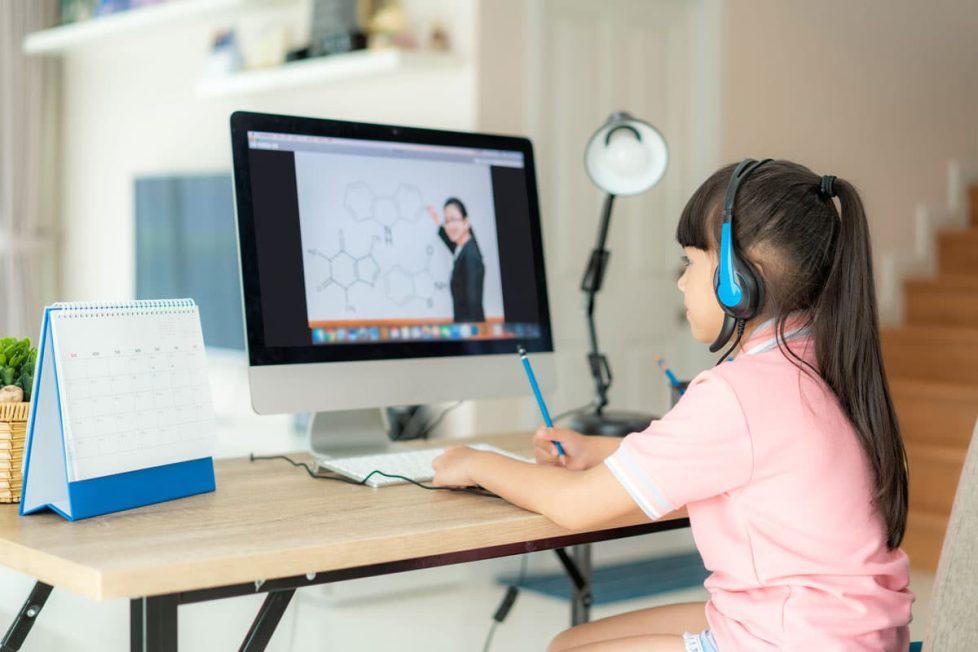

The challenges posed to education by the health emergency, its economic repercussions and the global context, demand unity, pragmatism and co-responsibility to identify strategies and major agreements to be sustained in the short, medium and long term, and to guarantee the human right to education to the entire population, prioritizing children, adolescents and young people who face different vulnerabilities and, therefore, greater risk of dropping out of school.


Opinion:

The education of the future will not be tied to specific subjects, nor to individual student work, but to the development of skills such as communication, creativity and critical thinking.

In Ecuador we must implement above all the quality preparation of teachers in order to achieve a quality education adapting to the technological time we are living and that due to the pandemic of Covid-19 has had to develop in a forced way and thus be able to adapt to the new means by which classes can be taught. In a futuristic vision technology will cover much more in education and in our daily lives, unfortunately I think that in underdeveloped countries like Ecuador and several Latin American countries these technologies will not be available to everyone in such a short time. But at least let's hope that the internet is available to everyone since it is something fundamental for the new era of education.

Conclusion: The future of education

           By: Carissa Anahís Cortez Caicedo

 
In other words, Ecuador is profoundly transforming its education system. The relevance of the reform is today beyond dispute. But in addition to the old statements about deep ruptures, the country does what is prescribed in the vast scientific literature: it demonstrates that a system can gain significantly regardless of what its starting point is and focuses on what are known as the typical improvement prescriptions: focusing on improving teachers' teaching skills and school management's management skills, assessing learning outcomes, improving its data systems, facilitating improvement by introducing policies and legislation, and revising its standards and curricula.

The directly measurable and visible impacts are evident and confirm that education in the country is moving in the right direction. The impact of other reforms will require more time for the results to be visible. However, some impacts will be slow in coming; change is already being felt and is widely accepted by Ecuadorian society.

 Opinion

I believe that in 20 years, the education of our country will improve a lot, one of the things is that the educational process promoted by the Ministry of Education will be strengthened through the use of technology in education allowing the student and his family: access to the educational offerings of MINEDUC for each level and sub-level, interaction between teachers and students, digital literacy and democratic access to the benefits and opportunities of the knowledge society and the exercise of digital citizenship.


REFERENCES

  • CULTURA, E. M. (s.f.). CURSOS&POSTGRADOS. Obtenido de https://www.cursosypostgrados.com/noticias/como-sera-la-educacion-dentro-de-20-anos-31296.html
  • EDUCACION, M. D. (s.f.). MINISTERIO DE EDUCACION. Obtenido de https://educacion.gob.ec/futuros-de-la-educacion/
  • Aguerrondo, I., Crespo, C., Damme, W., & Robalino, M. (2014). vvob.org. Obtenido de vvob.org: https://www.vvob.org/files/20130830_paper-a_story_of_change-how_ecuador_seeks_to_sustain_its_development_agenda_through_large_scale_education_reform.pdf
  • El comercio. (21 de 07 de 2021). Ecuador aporta una visión diferente en el Foro Mundial de la Educación. Obtenido de Ecuador aporta una visión diferente en el Foro Mundial de la Educación: https://www.elcomercio.com/tendencias/sociedad/foromundialdelaeducacion-coreadelsur-ecuador-ministeriodeeducacion-crecimientopersonal.html
  • Ministerio de educación. (30 de 07 de 2021). Ecuador es uno de los que mas crece en educación. Obtenido de Ecuador es uno de los que mas crece en educación: https://educacion.gob.ec/ecuador-es-uno-de-los-que-mas-crece-en-educacion/
  • World Vision. (24 de 06 de 2021). Recuperar y revitalizar la educación 24 de enero Día Internacional de la Educación. Obtenido de Recuperar y revitalizar la educación 24 de enero Día Internacional de la Educación: https://www.worldvision.org.ec/sala-de-prensa/recuperar-y-revitalizar-la-educaci%C3%B3n-24-de-enero-d%C3%ADa-internacional-de-la-educaci%C3%B3n